 EN
EN

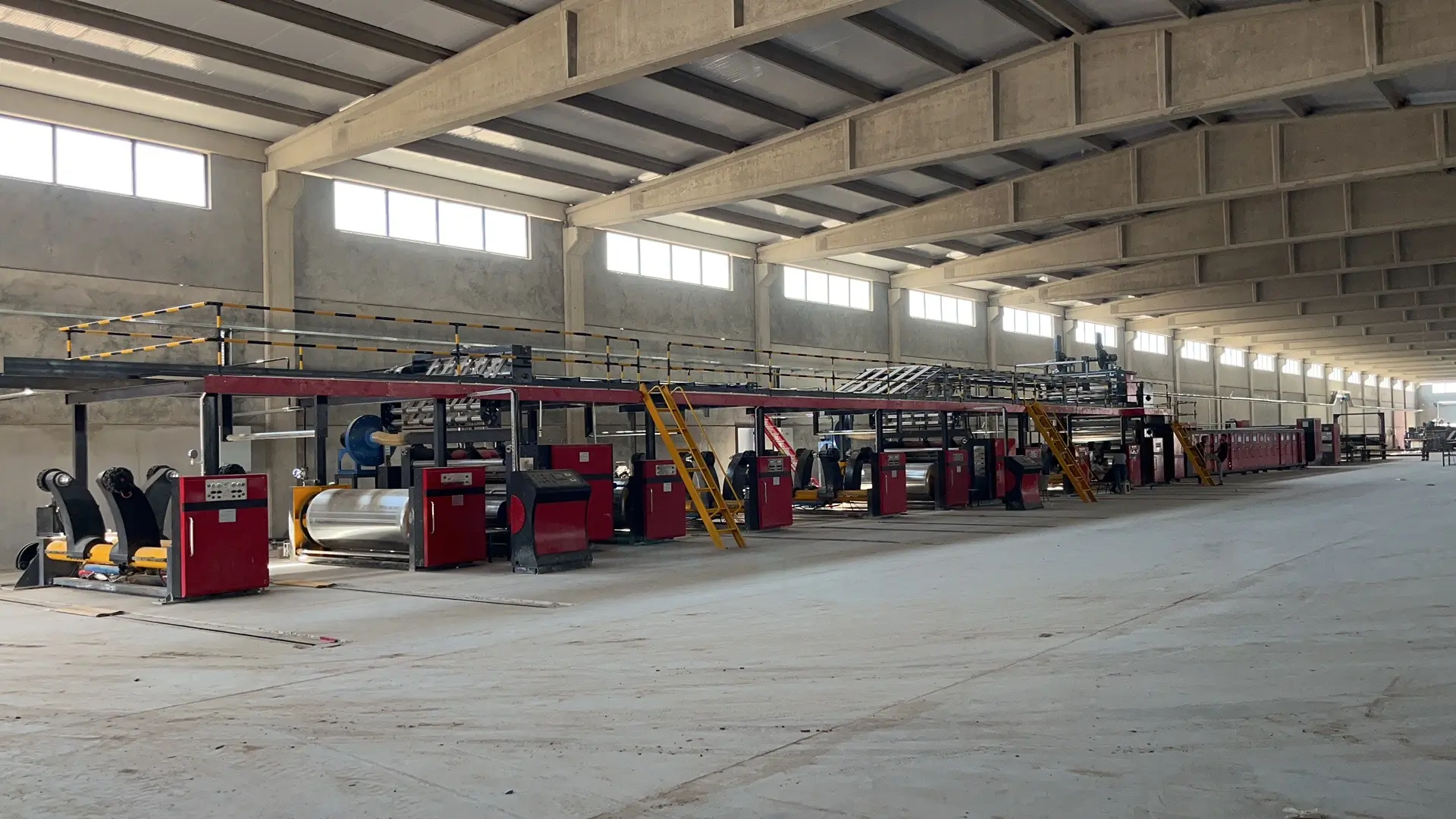
Match Corrugated Cardboard Machine Speed and Efficiency to Daily Output Requirements
Calculate required machine speed based on daily production volume, shift hours, and planned uptime
To figure out what kind of production speed is needed at minimum, here's a simple way to calculate it: Take the total number of units produced each day and divide that by the hours worked multiplied by how often machines actually run. Let's say a plant wants to make 50 thousand boxes every day. They work two shifts of eight hours each, so that's sixteen hours total. If their equipment runs about 85 percent of the time when it's supposed to be working, then doing the math looks like this: 50,000 divided by (16 times 0.85) gives around 3,600 boxes per hour. But wait! Real world operations aren't perfect. When plants forget to account for machine setups or regular maintenance breaks, they end up falling short. The Fiber Box Association data shows something interesting too. Plants running below 80% capacity tend to face delivery delays between 18 and 25% longer than those meeting their targets.
Compare speed, efficiency, and real-world utilization across manual, semi-automatic, and fully automatic corrugated cardboard machines
| Machine Type | Speed Range (boxes/hour) | Labor Efficiency | Real-World Utilization |
|---|---|---|---|
| Manual | 200–500 | 3–5 operators | 65–75% |
| Semi-Automatic | 800–2,000 | 1–2 operators | 80–85% |
| Fully Automatic | 3,000–8,000+ | <1 operator | 90–95% |
Operations running at high volumes can cut their per unit expenses by around 30% when they switch to automation. This mainly happens because fewer workers are needed and there's better control over material waste. Looking at actual numbers from TAPPI, scrap rates typically fall from somewhere between 8 and 10% on regular manual production lines down to just 3 or 4% when everything is handled automatically. For companies dealing with moderate output levels that need flexibility during busy seasons, semi automatic setups work pretty well. Manual equipment still has its place though, mostly for special orders where daily production stays below about 5,000 units.
Select Corrugated Cardboard Machine Size and Configuration Based on Volume and Product Profile
How box dimensions, wall construction, and daily output volume determine optimal machine width, feed system, and stacker capacity
The size of boxes has a direct impact on what width of machine is needed. Larger box formats simply won't fit through narrower corrugators, so manufacturers have to invest in bigger equipment when dealing with these larger sheets if they want to minimize waste from trimming. When it comes to wall construction, things get even more complicated. Single wall boxes are straightforward enough, but once we start looking at double or triple wall constructions, the whole process changes. These multi layer products require extra corrugating units, better control over glue application, and much tighter tolerances during registration. Production volume plays its own role too. Facilities running at 20 thousand sheets per day absolutely need automated palletizing systems to keep the production line moving smoothly. On the flip side, smaller operations below five thousand units daily can often manage just fine with manual stacking methods without creating bottlenecks. Choosing the right feed system makes sense based on what's being produced. Rotary cutters work great for fast paced single wall production runs, but when dealing with intricate fluting patterns in lower volume batches where variety matters more than speed, servo driven systems become a must for getting those precise cuts right every time.
Scalability planning: Modular upgrades vs. full-line replacement for evolving production volume needs
Looking at potential volume increases between 20 and 50 percent, most companies find that modular upgrades work pretty well for boosting capacity. Adding another corrugating unit or bringing in some sort of automated stacker usually gets them around 30 to 40 percent more output without having to replace all their main equipment. But things get tricky when we're talking about growth beyond 70 percent. At that point, fundamental issues start popping up everywhere. The frame just isn't rigid enough anymore, power systems struggle to keep up, and those old PLC architectures simply can't handle the extra workload or support additional automation features. And let's not forget about money matters either.
| Upgrade Approach | Payback Period | Downtime Impact | Volume Threshold |
|---|---|---|---|
| Modular | 12–18 months | 3–5 days | ≤50% increase |
| Full Replacement | 24–36 months | 2–4 weeks | ≥70% increase |
Operational flexibility remains critical for variable order volumes. Semi-automatic configurations enable faster changeovers for short-run specialties, while dedicated high-speed lines maximize uptime on standardized bulk orders—ensuring each asset operates within its design envelope.
Balance Flexibility and Throughput for Variable Order Volumes
Handling variable order volumes needs corrugated cardboard machines that can switch gears fast without cutting into productivity. Most plants deal with both tiny custom jobs and big standard orders at the same time, which creates a real headache for manufacturers. Machines built just for speed have trouble switching between different products so often, but super flexible ones might not keep up when there's a rush. Quick-change tech is making things better though digital displays, adjustable parts controlled by servos, and those recipe-based interfaces cut setup time down around 40 to 60 percent, we've seen in our own shop anyway. Plants dealing with all sorts of products usually find success with a mix of approaches: keep some high-speed lines running for regular items while having other machines ready for quick turnaround jobs. This setup keeps machines busy even when business slows down, yet still handles spikes in demand. What works best really depends on how much the order volume changes month to month. Shops where business jumps around 70% or more tend to need more adaptable equipment, while those with steady workloads focus on getting as much done as possible. Matching what the machines can do with what customers actually want, instead of chasing some ideal maximum, helps converters get more money out of every hour spent on production.
Evaluate ROI and Total Cost of Ownership Relative to Production Volume Scale
ROI comparison: Payback periods and operational cost per thousand units across low-, mid-, and high-volume corrugated cardboard machine configurations
When looking at return on investment, businesses need to consider both how quickly they'll get their money back and what each thousand units actually costs to produce. This means factoring in things like electricity bills, wages paid to workers, regular maintenance needs, how much glue gets used up, and all the waste generated along the way. Small scale equipment tends to pay for itself faster, usually within 12 to 18 months, but ends up costing more per item because there's so much hands-on work involved and the machines just aren't as efficient. Medium sized setups strike a reasonable middle ground, taking around 18 to 30 months to break even while still moving products through at a decent pace and making better use of resources overall. The big automated systems are where companies see the biggest savings though, cutting operational costs by as much as 40% compared to smaller operations when they're running close to full speed, even if it takes three to five years before the initial investment pays off. Total cost of ownership calculations frequently point toward medium volume arrangements being best for companies dealing with unpredictable customer demands. Meanwhile, those who have steady orders and can handle massive production volumes will find maximum profits over time with their high capacity lines. Remember to base these financial models on realistic sales forecasts instead of just looking at maximum possible output numbers from the manufacturer specs sheet, otherwise businesses risk either paying too much for idle equipment or facing serious delays in getting products out the door.
Table of Contents
- Match Corrugated Cardboard Machine Speed and Efficiency to Daily Output Requirements
- Select Corrugated Cardboard Machine Size and Configuration Based on Volume and Product Profile
- Balance Flexibility and Throughput for Variable Order Volumes
- Evaluate ROI and Total Cost of Ownership Relative to Production Volume Scale