 EN
EN

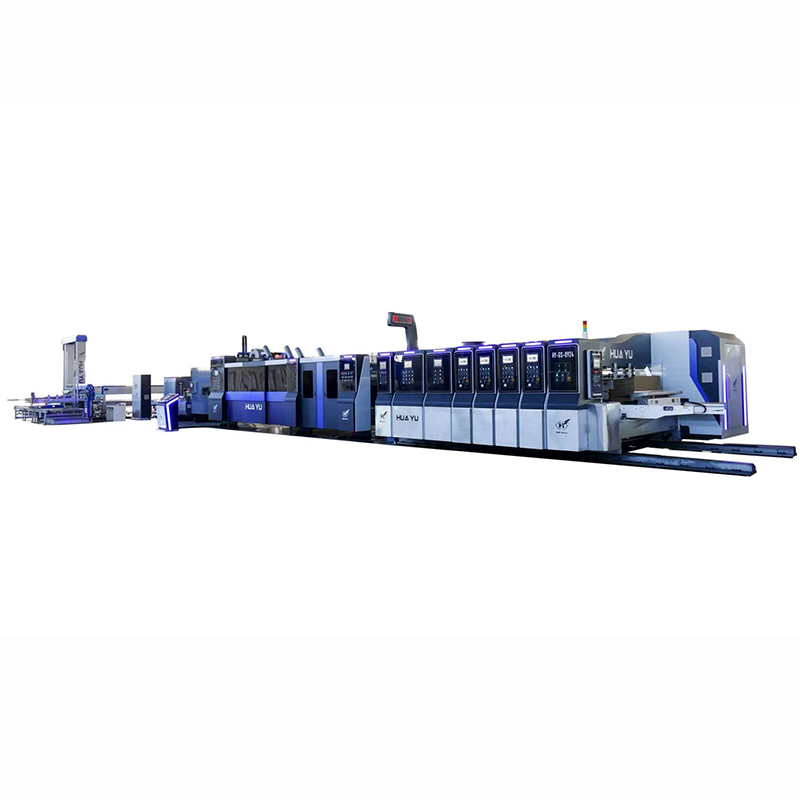
Elimination of Human Error Through Full Automation
Phenomenon: High Variability in Manual Carton Packing
When people pack cartons by hand, there are just too many inconsistencies because workers get tired, distracted, or have different levels of skill. Flaps often end up folded wrong, items inside might be off center, and tape gets applied too loosely or too tight sometimes. This leads to boxes that get damaged or get sent back altogether. The problem gets worse when someone does the same task over and over again for hours on end. Research indicates that mistakes happen more than 5 times out of 100 during long shifts, which adds up fast for companies dealing with all that extra work and wasted materials every year.
Principle: Standardized Motion, Timing, and Sequence Enforcement
Automatic carton packing machines cut down on all sorts of inconsistencies because they follow precise programs. The robotic arms move pretty much the same way each time, staying within about half a millimeter of accuracy. Servo motors handle the folding steps and sealing times too. Glue gets applied at just the right moment, give or take around fifty milliseconds. Boxes stand up straight after three seconds every single time, and pressure sensors check if those flaps are closing properly. With this kind of mechanical consistency, there's no need for workers to make judgment calls based on experience anymore. Every box comes out looking exactly how it should. Plants that switch to these automated systems often see something like ninety percent fewer packing issues than when people did the work manually. That means fewer damaged products getting shipped out, which saves money in the long run even though setting up the equipment costs a pretty penny initially.
Real-Time Error Detection via Integrated Sensors
Phenomenon: Missed Defects in Manual Visual Inspection
When it comes to checking packed cartons at high speed, human workers just can't stay focused all day long. After hours of staring at boxes going by on conveyor belts, tired eyes miss things they normally would catch. Distractions happen too, especially when someone's mind starts wandering after doing the same task over and over again. And let's not forget about those blind spots nobody really thinks about until something goes wrong. Studies from the industry show that around 15 percent of packaging problems slip through during busy times when everyone's rushing to keep up. These missed issues lead to angry customers later on who get damaged products or have to deal with returns.
Principle: In-Line Sensor Verification (Vision, Weight, Position)
Today's automatic carton packing machines come equipped with multiple sensor systems that help plug those annoying inspection gaps we all know about. The high speed vision cameras run at around 1,200 frames per second scanning every single carton for tiny surface flaws down to about half a square millimeter in size. At the same time, special weighing devices check if the product is within two grams either way, and there are also laser sensors making sure everything fits properly dimensionally speaking. Putting all these together means bad products get rejected instantly before they even leave the line. According to numbers from PMMI, this cuts down on packaging mistakes by roughly 41%. And companies tell us their production speeds jump up about 22% once they install these kinds of continuous checking systems across their operations.
Consistent Mechanical Execution with Sub-Millimeter Precision
Phenomenon: Inconsistent Folding, Sealing, and Loading in Manual Lines
Manual packaging lines suffer from human-dependent variability in critical operations. Operators achieve folding tolerances of ±5 mm, while inconsistent pressure during sealing causes 12% of carton failures in transit. Loading errors—such as misaligned products or uneven weight distribution—occur in 1 of every 25 manual pack cycles, increasing damage risk by 27%.
Trend: Servo-Driven Auto Carton Packing Machines Achieving ±0.3 mm Tolerance
Modern auto carton packing machines utilize closed-loop servo systems to eliminate mechanical drift. Precision encoders monitor position 500 times per second, adjusting actuators in real time to maintain ±0.3 mm tolerance in folding and loading. Force-controlled sealing heads apply uniform pressure (150–200 N/cm²), reducing leakage incidents by 81% versus manual methods.
Key Performance Comparison
| Parameter | Manual Line | Auto Carton Packing Machine | Improvement |
|---|---|---|---|
| Folding Tolerance | ±5 mm | ±0.3 mm | 94% tighter |
| Sealing Defect Rate | 12% | <2% | 83% reduction |
| Loading Alignment Error | 1 in 25 cycles | 1 in 1,000 cycles | 40x lower |
Closed-Loop Quality Control and Adaptive Correction
Modern auto carton packing machines come equipped with what's called closed loop quality control, basically a system that keeps fixing itself as it goes along. These machines constantly check everything about how boxes are being packed thanks to their built-in sensors and cameras. They look at where the flaps close properly, make sure labels stick right where they should be, and keep an eye on how aligned each box is throughout the whole process. When something goes off track, say there's even a tiny half millimeter shift or glue doesn't apply fully, the machine figures out why this happened and makes adjustments on the fly. Robotic arms might move boxes back into position during operation, sealing mechanisms can tweak their pressure settings, and label applicators will reset their angles all while keeping the production line running smoothly. This kind of smart response cuts down wasted materials by around two thirds when compared to older automated systems that couldn't adapt. The system works by checking sensor readings against very strict standards (sometimes within plus or minus 0.2 mm) and then records this information over time. Looking at past performance helps spot problems before they become big issues. Take carton creases that tend to open too early for instance, the machine will automatically spend more time folding those edges or put extra adhesive exactly where needed. All these little tweaks mean better quality products coming off the line without needing humans to stop and fix things manually after the fact.