 EN
EN

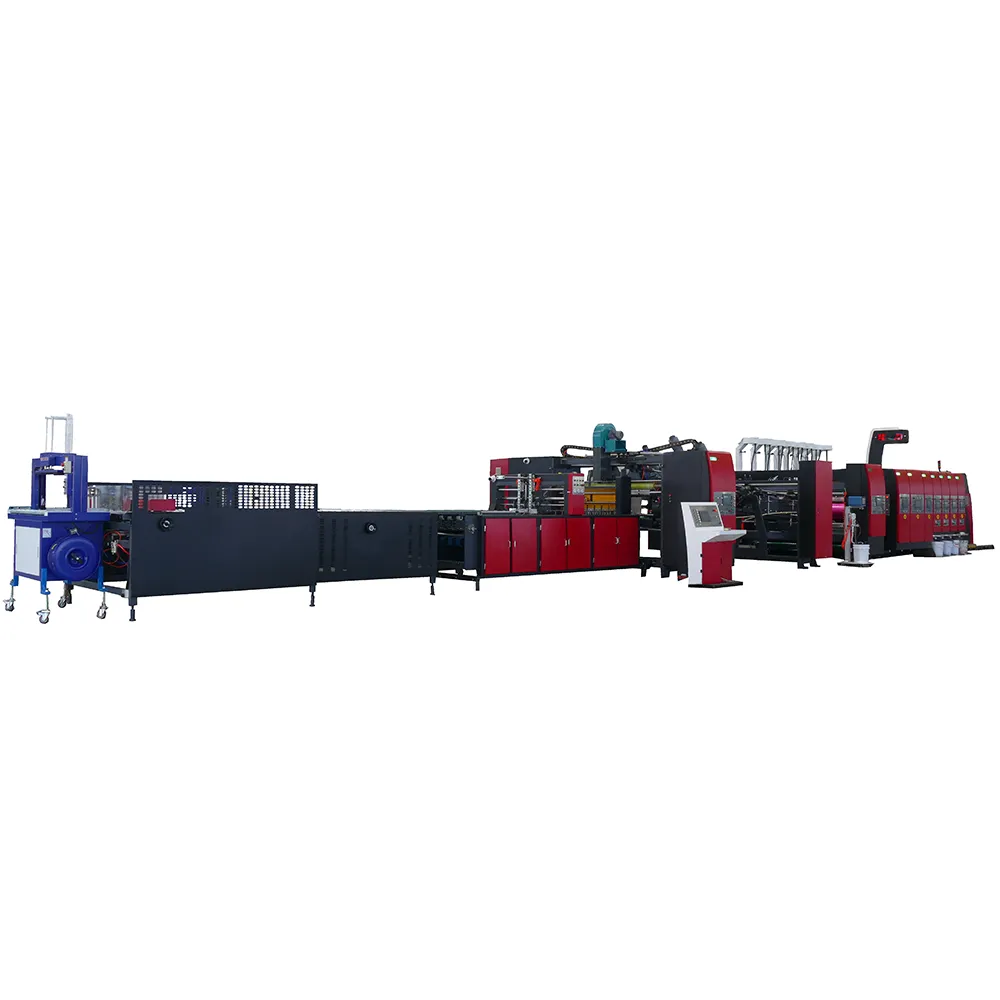
The Critical Role of Preventive Maintenance for Carton Box Line Production Equipment
Extending equipment lifespan through proactive care
Doing regular maintenance work helps stop parts from wearing out too fast because it takes care of those pesky friction spots and alignment problems before they get really bad. When maintenance crews lubricate those conveyor rollers on schedule and replace cutting blades when needed, the whole system stays in better shape overall. This means fewer times where everything has to be torn apart and fixed all at once. Plants that have switched to these predictive maintenance systems are seeing their important parts last anywhere from 20 to 30 percent longer than places that only fix things after something breaks down. Folding arms and glue applicators specifically seem to benefit a lot from this approach.
Reducing unplanned downtime with structured maintenance plans
According to research from the Ponemon Institute in 2023 looking at various packaging operations, plants that had proper prevention strategies saw about 40 percent fewer equipment failures compared to ones that waited until something broke down before fixing it. Good maintenance routines combine what operators do every day, like checking how tight belts are or clearing out stuff stuck in machinery, along with regular checkups by technicians who look at air pressure systems and make sure all the wires are connected properly. When companies adopt this kind of multi-level strategy, unexpected shutdowns become rare events instead of constant problems. That means when business picks up, production doesn't get disrupted because there's already time built into the schedule for necessary maintenance work.
Data insight: Facilities with preventive programs report 40% fewer breakdowns
The 40% reliability gap equates to over 300 saved production hours annually for mid-sized box manufacturers. For equipment processing 12,000 boxes per hour, this prevents losses exceeding $740,000 from wasted materials and rush-order surcharges. The data underscores how preventive maintenance directly protects profitability in thin-margin packaging operations.
Balancing short-term savings vs. long-term reliability in maintenance spending
While deferring lubrication or skipping calibration may reduce short-term costs, industry analysis shows every $1 saved on preventive care incurs $4–7 in future repairs and lost output. Allocating 2–3% of equipment value annually to maintenance preserves folding accuracy and glue consistency—key quality requirements for e-commerce clients demanding precise box dimensions.
Daily and Weekly Maintenance Routines for Peak Performance
Daily cleaning, visual inspections, and lubrication of carton box line production equipment
Starting every shift with a quick clean up makes all the difference. Sweep out any leftover bits stuck on conveyors, check those cutting blades for buildup, and give folding stations a good wipe down so nothing gets jammed later on. Take a moment to look at the hydraulic hoses too – cracks or bulges mean trouble down the road. Same goes for electrical connections; a little fraying now could turn into a big problem later. Don't forget to apply proper lubricant where it counts most: chains, bearings, those guide rails everywhere. Maintenance folks have found that keeping these parts well oiled cuts down on wear caused by friction somewhere around 22% over time.
Weekly checks: Filter replacement, belt tension, and sealing component maintenance
Replace air filters every 5–7 operating days to maintain motor cooling and prevent overheating. Use a tension gauge to verify belt alignment within ±1 mm specifications. Test adhesive spray nozzles and sealing elements for clogs, as inconsistent application accounts for 35% of box quality rejections.
Following operational guidelines to ensure safety and efficiency
Always stick to those torque specs when working on bolts or setting up sensors because guess what? About 60% of parts failing too soon comes down to just bad adjustments. Companies that train their staff properly see almost half fewer safety issues (around 48%) than places that wait for things to break before fixing them, according to recent industry research from 2024. And don't forget to write everything down in that common maintenance log everyone can access. This simple habit catches patterns we might otherwise miss until it's too late, saving both time and money in the long run.
Monthly In-Depth Maintenance to Ensure Precision and Reliability
Blade Inspection and Replacement for Consistent Cutting Accuracy
Begin monthly maintenance by assessing blade sharpness and alignment. Dull or misaligned blades lead to uneven cuts, material waste, and delays. Measure wear with digital micrometers and replace blades when tolerances exceed 0.2 mm. Rotating spare blades into service maintains consistent performance while extending tool life.
Calibrating and Aligning Machine Components to Correct Performance Drift
Temperature shifts and vibration can misalign feed rollers and folding arms over time. Use laser alignment tools to maintain parallelism within 0.05 mm. Adjust servo motor settings to compensate for seasonal humidity changes affecting cardboard elasticity. Facilities using preventive replacement schedules based on material abrasiveness reduce calibration-related downtime by 18% annually.
Comprehensive Lubrication and Wear Assessment of Critical Parts
- Inspect chains and bearings for micropitting using borescopes
- Replace grease in high-friction zones with NSF H1-certified lubricants
- Measure gear backlash with dial indicators, targeting ±0.3° play
Focus on die-cut stations where cyclical loads exceed 15 kN, as these areas are prone to accelerated wear.
Troubleshooting Common Issues in Carton Box Line Production Equipment
Identifying Causes of Misalignment and Jams During Box Forming
Persistent jams and misalignment often result from debris buildup in feed mechanisms or worn suction cups. Operators should prioritize daily inspections of conveyor guides and folding arms. Research indicates that 45% of jams stem from uncalibrated components, highlighting the importance of systematic checks.
Fixing Uneven Cuts With Blade and Pressure Adjustments
Uneven cuts usually signal blade wear or incorrect pressure settings. Replace blades showing ≥0.5 mm edge chipping and adjust hydraulic pressure to 10–12 psi for corrugated materials. Fine-tuning these parameters restores cutting precision and can reduce material waste by up to 18%.
Building a Maintenance Culture to Boost Operational Efficiency
Training Operators to Perform Effective Daily Maintenance on Carton Box Line Production Equipment
Implement hands-on training programs that teach cleaning, lubrication, and inspection procedures. Simulated scenarios—like debris buildup in glue applicators—enhance retention and reduce errors. Cross-training across machine stations improves adaptability and ensures consistent execution of daily routines.
Empowering Teams to Own Maintenance Routines and Report Issues Early
Equip operators with digital tools to log anomalies such as alignment drifts or unusual noises in real time. Facilities that allow frontline teams to make minor adjustments—like tuning conveyor speed—report 28% fewer minor stoppages (Facility Management Quarterly, 2023). Regular feedback sessions reinforce accountability and support continuous improvement.
Integrating Maintenance KPIs into Operational Reviews for Continuous Improvement
Track key metrics including mean time between failures (MTBF), lubrication schedule compliance, and post-maintenance defect rates. Share these KPIs in cross-departmental meetings to align maintenance with production goals. Over time, data-driven reviews enable smarter resource allocation and refinement of preventive strategies.
FAQ
What is preventive maintenance and why is it important for carton box line production equipment?
Preventive maintenance refers to regular and systematic inspection, cleaning, and upkeep of equipment to prevent failures and extend its lifespan. It is crucial for carton box line production equipment as it reduces downtime, enhances reliability, and protects profitability.
How often should maintenance be performed on carton box line production equipment?
Daily and weekly maintenance routines should be conducted for optimal performance, while monthly in-depth maintenance ensures precision and reliability. Regular checks and calibration are also essential.
What are the consequences of neglecting preventive maintenance?
Neglecting preventive maintenance can lead to unexpected equipment failures, increased downtime, higher repair costs, and loss of productivity. Long-term reliability can be compromised, affecting operational efficiency.
Table of Contents
- The Critical Role of Preventive Maintenance for Carton Box Line Production Equipment
- Daily and Weekly Maintenance Routines for Peak Performance
- Monthly In-Depth Maintenance to Ensure Precision and Reliability
- Troubleshooting Common Issues in Carton Box Line Production Equipment
- Building a Maintenance Culture to Boost Operational Efficiency
- Training Operators to Perform Effective Daily Maintenance on Carton Box Line Production Equipment
- Empowering Teams to Own Maintenance Routines and Report Issues Early
- Integrating Maintenance KPIs into Operational Reviews for Continuous Improvement
- FAQ