 EN
EN

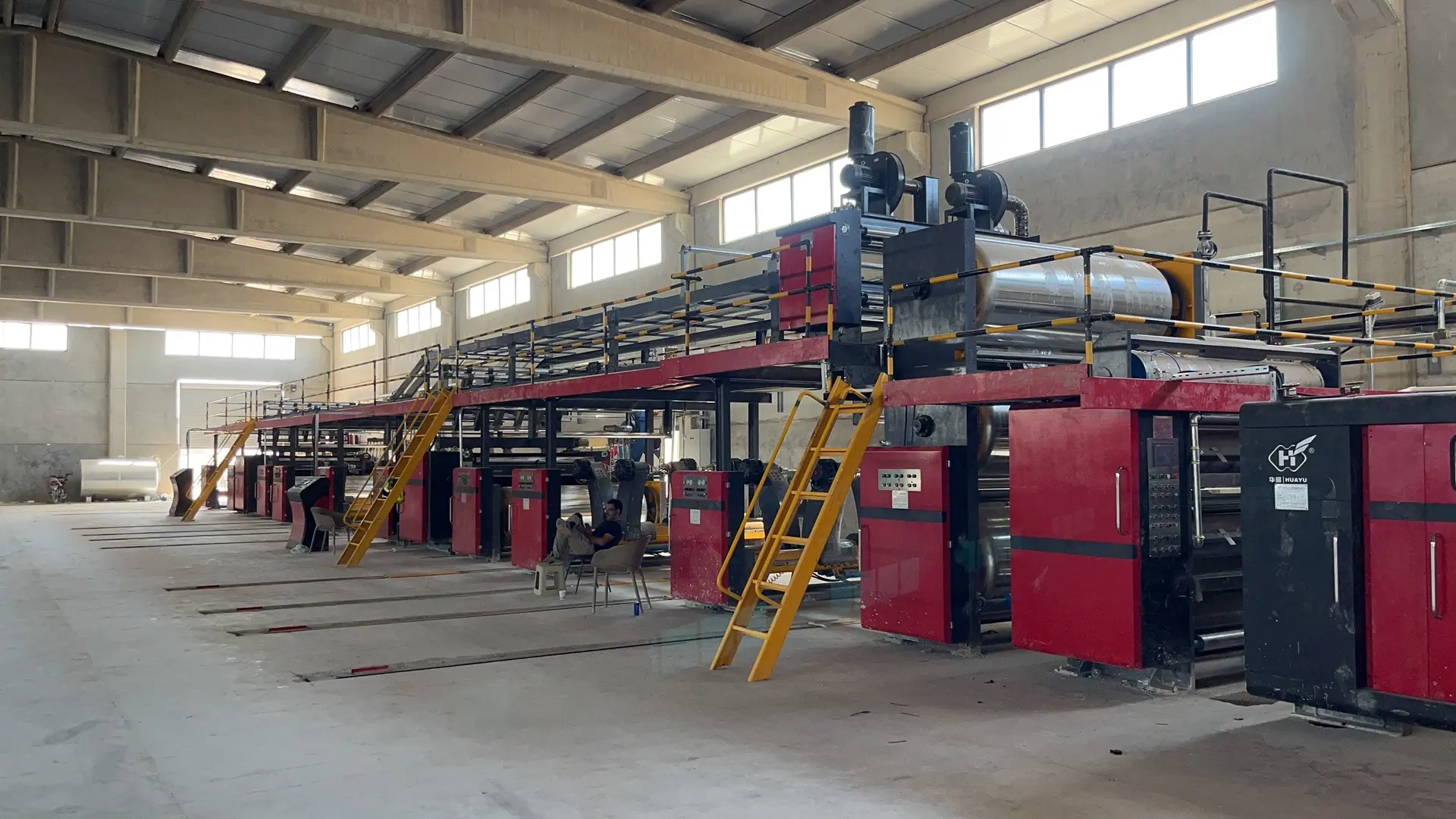
Matching Production Capacity to Business Scale and Growth Goals
Aligning Machine Size With Available Factory Space and Layout
Production line footprints directly impact operational efficiency in corrugated cardboard manufacturing. Equipment occupying 15–20% of total floor space typically optimizes workflow while allowing room for material staging, based on 2023 factory layout studies. Oversized machinery can create bottlenecks in smaller facilities, while undersized units limit throughput potential.
Evaluating Current Production Volume and Future Scalability Needs
A production line generating 8,000–12,000 linear meters/hour suits medium-scale operations. Scalable systems with modular add-ons allow up to 30% capacity expansion, accommodating growth without full-line replacement. Facilities experiencing consistent annual demand increases of 7–9% should select equipment that supports phased scalability over a five-year horizon.
Connecting Output Requirements to Long-Term Business Objectives
Manufacturers targeting regional distribution benefit from machines capable of 18–24 hour/day operation, ensuring consistent supply. Niche producers may prioritize flexibility for short runs and low waste (<4%), aligning with specialized market demands. Export-focused operations require approximately 22% higher base capacity than domestic suppliers to meet international volume and compliance requirements.
Automation Level and Technological Integration in Corrugated Cardboard Production Line Equipment
Comparing Semi-Automatic vs Fully Automatic Corrugated Board Production Lines
For small businesses working with tight budgets, semi automatic systems still make sense since they need people to handle roll changes and align things manually. The upfront costs are much lower compared to full automation. On the other hand, completely automatic production lines rely on those PLCs we all hear about these days plus robots doing most of the heavy lifting. These setups can crank out material at over 350 meters per minute, which cuts down on mistakes caused by tired workers. Looking at data from the latest Packaging Automation Report released in 2023 shows something interesting though. While these fully automated machines boost productivity by around 37% when running at full capacity, they don't really pay off for facilities that only produce less than 20 tons daily. Many manufacturers find themselves stuck between wanting speed and keeping costs reasonable.
Integrating Smart Controls and Real-Time Monitoring Systems
Today's production lines are packed with sensors and smart algorithms that keep glue temps right around 160 to 185 degrees Celsius and nip pressure between 4 and 6 kilograms per square centimeter. Operators watch real time dashboards for moisture levels that need to stay within half a percent plus or minus, while checking how evenly the material is distributed across the width. The fancier systems actually tweak settings on their own to meet those ISO standards everyone keeps talking about these days. Companies that jumped on this bandwagon early saw something like a 22 percent drop in wasted materials according to last year's issue of Packaging World magazine.
Impact of Automation on Labor Costs and Operational Consistency
Putting in place automated production lines cuts down on manual work requirements somewhere around 60 percent. The catch? These systems need tech-savvy workers who know their way around mechatronics stuff. According to the latest PMMI workforce report from 2023, nearly half (that's 43%) of manufacturing companies are struggling to find such talent right now. Still, most factories push forward because when it comes to tension control specifically, these automated systems clock in at about 99.2% uptime compared to roughly 87% for traditional manual methods. That kind of reliability makes all the difference for consistent product quality and fewer stoppages during production runs, which ultimately pays off even with the upfront costs involved.
Trend Analysis: Adoption of IoT-Enabled Machinery in Packaging Plants
More than a quarter of corrugated board manufacturing plants have started using internet connected devices for predicting when machines might fail. These systems look at things like how much the equipment vibrates and changes in motor current patterns, often spotting problems three days before they actually happen according to the Industrial IoT Study released last year. Take one plant located somewhere in the Midwest region as an example. After implementing these smart sensors across their operations, they saw some impressive results over just half a year period. Unplanned stoppages dropped by nearly 40 percent, saving them considerable time and money. They also cut down on wasted materials by around 18%. Plus, workers could run special orders even if customers wanted something produced in batches as small as 500 meters long without disrupting regular production schedules too much.
Material Flexibility and Processing Precision
Assessing Supported Board Types and Flute Configurations
Today's machinery needs to cope with all sorts of board specs, ranging from thin E-flute boards around 1 to 1.5 mm thick right up to those tough BC-flutes used for serious industrial shipping jobs. Top notch systems can actually manage eight different flute profiles or even more, so they switch quickly between things like B-flute at 3.2 mm which works great for retail boxes and the thicker C-flute measuring 4 mm that holds up better for structural stuff. No need to stop production during these changes either. The ability to handle multiple board types really makes companies more responsive to what the market wants. According to a recent study by the Corrugated Packaging Alliance in 2023, factories working with five or more board varieties saw their flexibility improve by about 40%. That kind of adaptability matters a lot when trying to stay competitive.
Handling Variable Material Thickness and Substrate Quality With Precision
Servo driven feeders can hold tolerances around 0.15 mm even when working with substrates between 150 and 600 GSM. This becomes really important when dealing with recycled materials since their density tends to vary quite a bit. Thermal expansion is another factor to consider. For example, kraft liner expands at about 0.07 mm per meter per degree Celsius. When humidity levels change, this affects how stable dimensions stay throughout production runs. That's why modern systems make real time adjustments to keep things on track and avoid drifting measurements. The industry has seen some impressive improvements too.
Ensuring Mechanical Stability During High-Speed Processing of Diverse Materials
The machine's vibration dampening frame works together with its adaptive torque control system to keep things running smoothly at impressive speeds of around 400 meters per minute. It handles all sorts of materials too, from those thin microflute boards right up to heavy duty 800 GSM triple wall products. The cross braced rollers are another smart design choice since they prevent any significant bending during operation. At maximum output, these assemblies only allow about 0.3 mm of movement along the axis, which matters a lot when moving back and forth between stiff new fibers and softer recycled materials. All these engineering details pay off in practice, keeping waste under control at just over 2 percent despite frequent changes in materials throughout each work shift, sometimes as many as fifteen different types in one day.
Cost-Efficiency, ROI, and Long-Term Operational Value
Calculating Return on Investment Through Efficiency Gains and Waste Reduction
Modern systems generate ROI through multiple channels:
- Material Optimization: Automated trimming reduces board waste by 12–18% via real-time width adjustments
- Energy Efficiency: Variable-frequency drives cut power consumption by 22% during partial-load operations
- Labor Productivity: Integrated sheet counters and stackers boost per-shift throughput by 35%
Plants using IoT-enabled equipment achieved 18% faster ROI timelines due to predictive alerts preventing unplanned downtime, according to a 2024 industry analysis.
Design features that enhance reliability and reduce failure rates
Automatic wear-compensation mechanisms in critical components like corrugating rolls and glue applicators extend service intervals. Stainless steel modular designs reduce particulate contamination risks by 34% compared to carbon steel, while quick-release mechanisms enable 50% faster servicing of folding and cutting subsystems.
Scheduled maintenance protocols and component lifespan expectations
Equipment following 500-hour lubrication cycles lasts an average of 2.7 years longer than those with irregular maintenance, per the 2023 industry benchmark. Standard recommendations include complete gearbox overhauls every 18–24 months and belt replacements annually. Automated alert systems have reduced missed service intervals by 61%.
Data Point: Average downtime reduction in automated lines with predictive maintenance
Facilities using IoT vibration sensors and thermal imaging achieve fault detection 89% faster, cutting annual downtime from 143 to 32 hours on average (Corrugated Industry Efficiency Report, 2024). These systems identify bearing wear patterns 14 days before catastrophic failure occurs in 93% of cases, enabling timely interventions.