 EN
EN

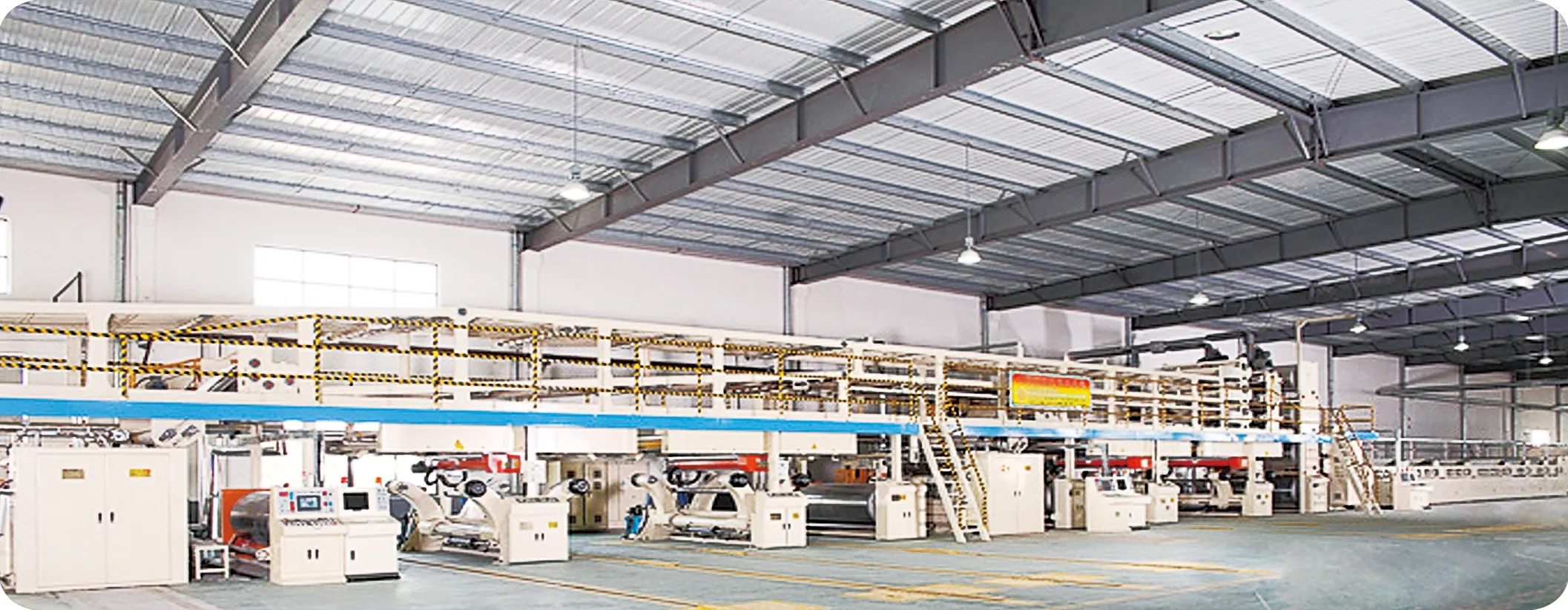
In the packaging industry, corrugated cardboard is the backbone of product protection and transportation, and a high-quality corrugated cardboard production line directly determines the efficiency, quality, and profitability of your business. However, with numerous builders in the market, selecting a professional one that aligns with your actual needs has become a critical decision. This article will guide you through the key criteria for choosing a professional corrugated cardboard production line builder, with insights closely tied to the core advantages of reliable production lines.
1. Prioritize Core Performance: Focus on Efficiency and Continuity
The first step in choosing a professional builder is to evaluate the production efficiency of their lines, this is the foundation of meeting market demand, especially for large-scale orders. A professional builder will not only claim "high efficiency" but also provide tangible performance indicators. For example, their corrugated cardboard production lines should adopt a continuous assembly line design, which allows a single line to produce tens of thousands of meters of cardboard per day and operate 24/7 without frequent interruptions.
Compare this to traditional stand-alone, step-by-step production models: the latter often requires manual transfer between processes, leading to delays and reduced output. If a builder’s line can achieve round-the-clock operation and high daily output, it means they have optimized the line’s structure and component reliability, critical for businesses that need to respond quickly to large orders (e.g., e-commerce peak seasons or bulk product shipments). A non-professional builder may cut corners on line continuity, resulting in frequent breakdowns and missed delivery deadlines.
2. Insist on Stable Quality: Verify Precision Control Systems
Stable cardboard quality is non-negotiable, poorly made cardboard (e.g., weak bonding, uneven flatness, or insufficient stiffness) will lead to damaged products during transportation, increasing your rework costs and reputational risks. A professional corrugated cardboard production line builder will equip their lines with precision control systems for temperature, pressure, and speed, as these are the three core factors affecting cardboard quality.
Key processes like corrugating (shaping the cardboard’s "flutes"), gluing, and laminating (bonding multiple layers) must be regulated in real time. For instance, if the temperature during corrugating is too low, the base paper won’t bond properly; if the pressure is too high, the flutes may collapse, reducing cushioning. A professional builder’s line will automatically adjust these parameters to ensure consistent bond strength, flatness, and stiffness across every batch of cardboard, minimizing defective products. When communicating with a builder, ask for on-site test reports or customer case studies to confirm that their quality control systems deliver on their promises, avoid builders who only provide vague claims without data support.
3. Evaluate Cost-Efficiency: Look for Waste Reduction and Labor Optimization
Running a corrugated cardboard production line involves ongoing costs for raw materials (base paper, glue) and labor, so a professional builder will design lines to reduce these expenses without compromising quality. Their solutions should include three key features:
- Automated cutting: Manual cutting often leads to uneven sizes and excess 边角料 (scrap); automated cutting systems ensure precise dimensions, directly reducing base paper waste.
- Precise gluing (e.g., thin-film gluing): Traditional gluing methods tend to use more glue than needed, increasing material costs. Thin-film gluing applies a uniform, minimal layer of glue, ensuring strong bonding while cutting glue consumption.
- Optimized base paper utilization: The line’s design should minimize scrap during processing (e.g., by aligning cutting patterns with base paper rolls). Additionally, automated processes reduce the number of labor positions required, fewer workers mean lower labor costs and fewer operational errors (e.g., manual misalignment during lamination).
A non-professional builder may overlook these details, offering lines that seem cheap upfront but lead to high long-term waste and labor costs. Always ask a builder to explain how their line optimizes cost efficiency, this is a key sign of professionalism.
4. Check Production Flexibility: Meet Diverse Packaging Needs
The packaging industry serves a wide range of products, from lightweight electronics to heavy machinery, each requiring cardboard with different load-bearing capacities and cushioning properties. A professional corrugated cardboard production line builder will design lines with strong flexibility, allowing you to switch between different flute types and ply counts easily.
- Flute types: Common types include A, B, C, and E flutes. A-flutes have larger, taller structures for better cushioning (ideal for fragile items), while B-flutes are shorter and denser for better printability and stacking (suitable for boxes with labels). E-flutes are thin and rigid, perfect for small, lightweight products. A professional line should let you switch between these types without lengthy downtime or major equipment adjustments.
- Ply counts: 3-ply (single corrugated layer) is used for light items, 5-ply (two corrugated layers) for medium load-bearing, and 7-ply for heavy products (e.g., industrial parts). The line should support quick changes in ply counts to meet custom orders.
If a builder’s line is only capable of producing one type of flute or ply count, it will limit your ability to serve diverse customers. A professional builder understands that flexibility equals business growth, their lines should adapt to your changing order needs.
5. Verify Industry Experience and After-Sales Support
Even the best production line requires maintenance and support, so a professional builder must have rich industry experience and reliable after-sales service. Look for builders who have been in the corrugated machinery industry for years: they will have a deeper understanding of common production challenges (e.g., seasonal changes affecting base paper moisture) and can offer tailored solutions.
Additionally, ask about their after-sales support: Do they provide on-site installation and training for your workers? Do they offer regular maintenance checks? How quickly can they respond to breakdowns (e.g., 24-hour technical support)? A non-professional builder may sell you a line and then disappear when problems arise, leaving you with costly downtime. Choose a builder who views your success as their own, this is the mark of a long-term partner.
Common Questions from Users & Answers
Q1: I often receive orders for different flute types (e.g., A-flute for fragile goods and B-flute for standard boxes). Will a professional production line let me switch between these quickly?
A: Yes. Professional corrugated cardboard production lines (like those from reputable builders) are designed for flexible flute type switching. They use modular components that allow you to adjust the corrugating rollers (which shape the flutes) without disassembling large parts of the line. Most professional lines can complete a flute type switch in a short time (often within 30 minutes to 1 hour), ensuring you don’t lose time on custom orders.
Q2: My business is small to medium-sized, can a professional production line still help me reduce raw material waste?
A: Absolutely. Professional lines focus on cost efficiency for businesses of all sizes. Features like automated cutting (reduces base paper scrap), precise thin-film gluing (cuts glue use), and optimized base paper utilization are not just for large factories. For small to medium-sized businesses, these features can lower raw material costs by 10-15% (depending on order volume), a significant saving that improves profitability over time.
Q3: Is 24/7 operation necessary for a corrugated cardboard production line? I don’t have orders that require round-the-clock output yet.
A: While 24/7 operation isn’t mandatory for everyone, it’s a key indicator of a professional line’s reliability and efficiency. Even if you don’t use it 24/7 now, a line capable of continuous operation means it has durable components and a stable design, reducing the risk of breakdowns during peak hours. As your business grows and you take on larger orders, you can easily scale up production by extending operating hours without investing in a new line. Professional builders will also let you adjust the line’s speed to match your current needs, so you won’t waste energy or resources when running at less than full capacity.
Table of Contents
- 1. Prioritize Core Performance: Focus on Efficiency and Continuity
- 2. Insist on Stable Quality: Verify Precision Control Systems
- 3. Evaluate Cost-Efficiency: Look for Waste Reduction and Labor Optimization
- 4. Check Production Flexibility: Meet Diverse Packaging Needs
- 5. Verify Industry Experience and After-Sales Support
-
Common Questions from Users & Answers
- Q1: I often receive orders for different flute types (e.g., A-flute for fragile goods and B-flute for standard boxes). Will a professional production line let me switch between these quickly?
- Q2: My business is small to medium-sized, can a professional production line still help me reduce raw material waste?
- Q3: Is 24/7 operation necessary for a corrugated cardboard production line? I don’t have orders that require round-the-clock output yet.