 EN
EN

Automating Core Processes in Carton Box Production Equipment
The Role of Automated Cutting, Folding, and Gluing Machines in Modern Production
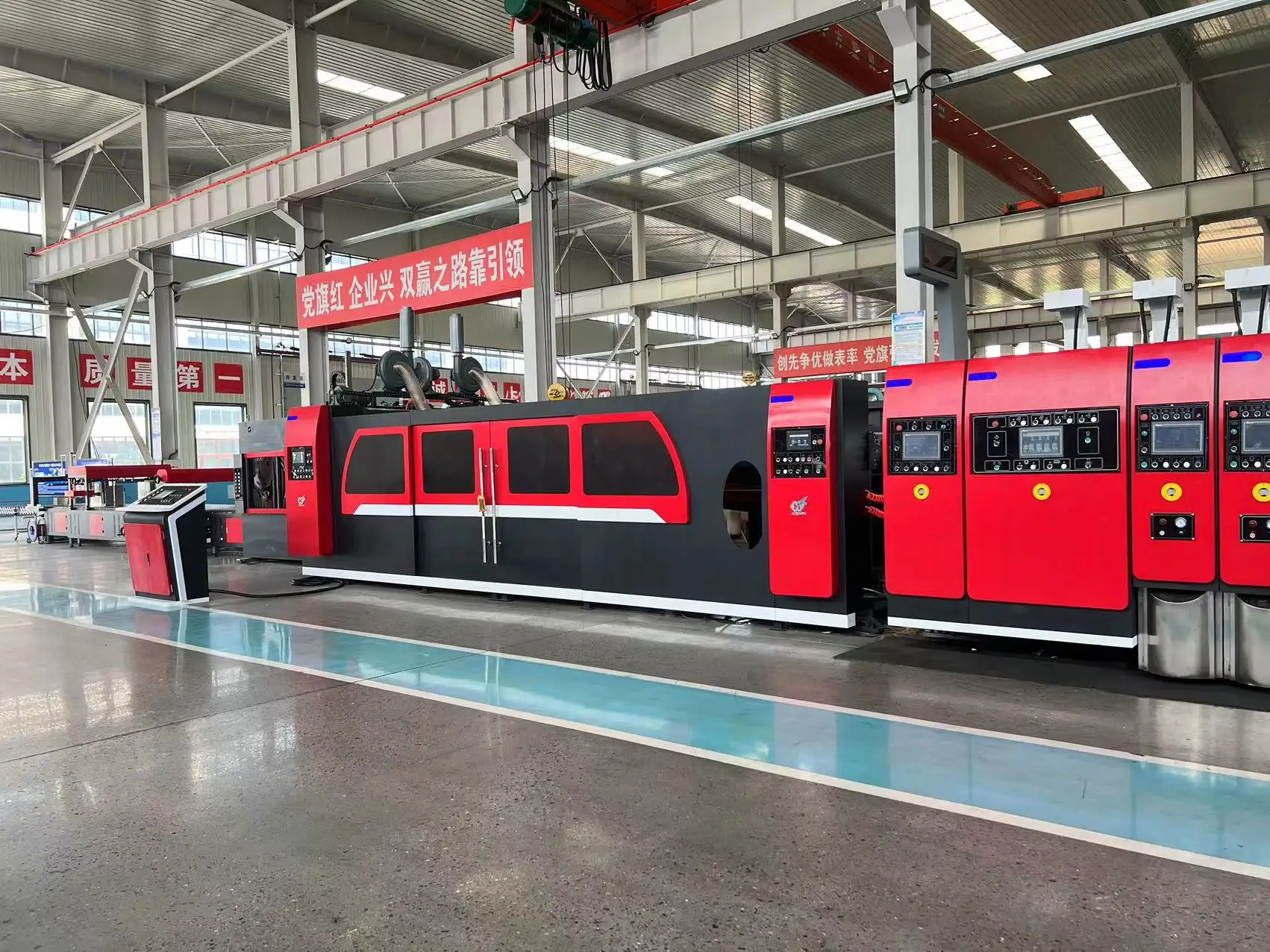
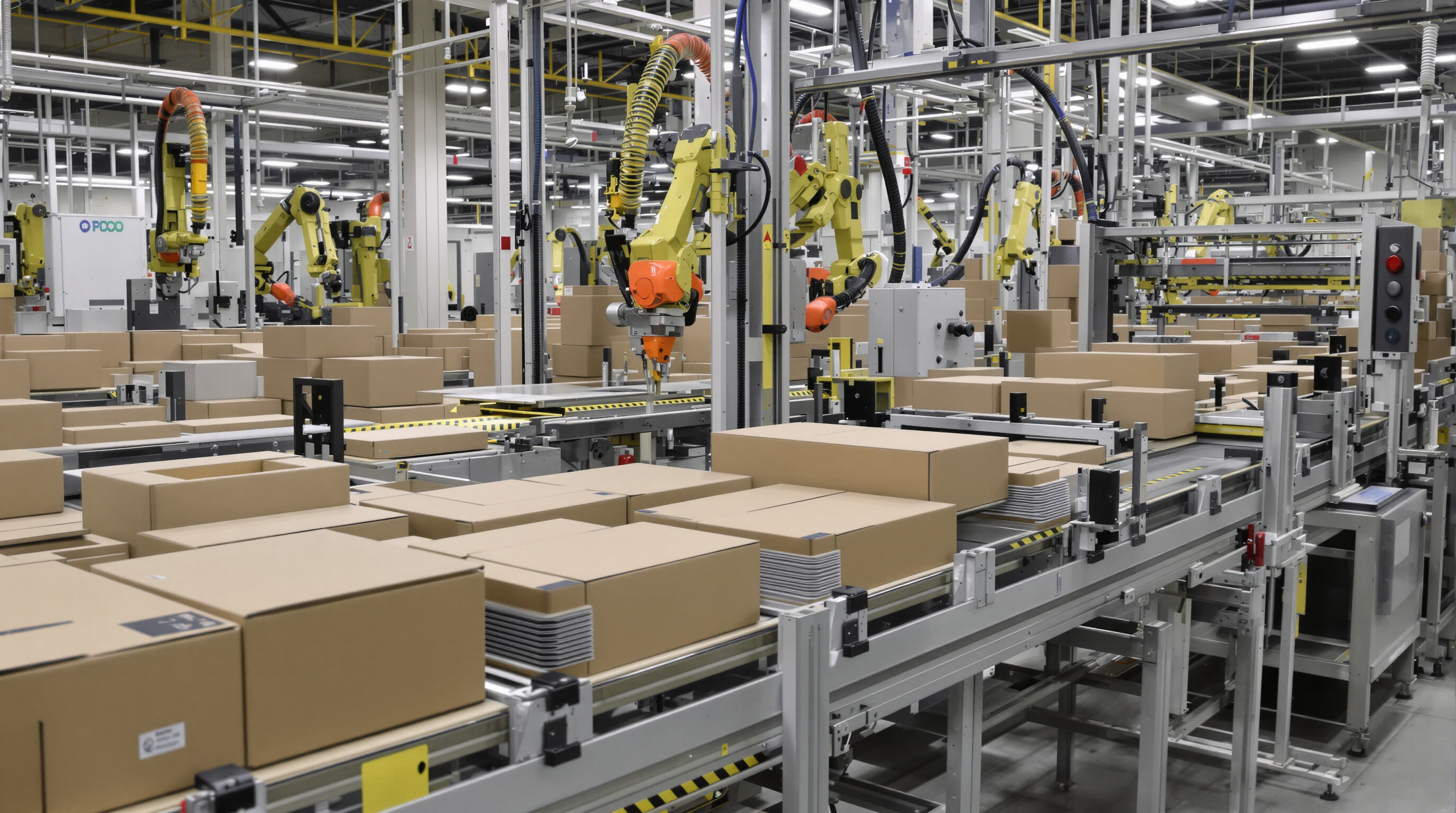
The backbone of efficient carton box manufacturing lies in automated cutting, folding, and gluing equipment. These machines work with precision guided blades and sensors that keep everything within about half a millimeter tolerance. This level of accuracy matters because it makes sure the creases form properly and the glue gets applied just right, which directly affects how strong the finished boxes will be. Take a look at what modern systems can do these days they handle well over 12 thousand corrugated sheets every single hour.
Integrating Automated Systems with Existing Carton Box Production Lines
Modern automation can be seamlessly integrated into legacy production lines using modular PLC interfaces and standardized API protocols. Facilities can add robotic palletizers or AI-powered inspection systems without replacing core machinery. For example, one plant achieved 85% faster changeovers by retrofitting automated tool-swapping arms to a 15-year-old die-cutting press.
Emerging Trends: Smart Machines and Self-Adjusting Systems in Packaging
The latest carton machinery comes equipped with smart sensors for predicting when parts might fail and nozzles that automatically adjust their settings without manual intervention. Some manufacturers have started implementing machine learning algorithms that look at things like vibrations and heat patterns to spot potential bearing problems well before they happen sometimes as early as three days ahead. This kind of early warning system cuts down on unexpected stoppages by around 40 percent according to field tests. There are also experimental setups where machines can actually change the size of boxes while running based on real time information picked up from RFID tags further along the production line. What this means is factories can respond faster to changing orders without having to completely shut down operations for adjustments.
Optimizing Machine Performance for Higher Output and Quality
Fine-Tuning Settings on Carton Box Production Equipment for Maximum Efficiency
Precision calibration significantly enhances efficiency and reduces waste. According to a 2024 Frontiers in Mechanical Engineering study, optimization algorithms such as genetic and particle swarm methods improve folding accuracy by 22% and lower energy use by 17% compared to manual tuning. Operators can now:
- Adjust blade pressure within ±0.2 N to accommodate varying board densities
- Apply glue at rates as low as 4 g/m² without compromising seam integrity
- Synchronize conveyor speeds across stations with sub-0.1-second precision
Streamlining Printing, Cutting, and Assembly Workflows in Converting Machinery
Integrated production lines reduce job changeover times by 30% through automated workflow orchestration. Synchronized printing and cutting systems eliminate 72% of alignment defects in multi-color packaging jobs, while advanced registration maintains ±0.15 mm print-to-cut accuracy even at 12,000 sheets per hour. This enables transitions between box sizes in under 30 minutes.
Real-World Example: Reducing Downtime and Enhancing Product Consistency
A Midwest manufacturer reduced unplanned downtime by 40% after installing IoT-enabled vibration sensors on critical carton equipment. Real-time monitoring allowed predictive bearing replacements 8–12 hours before failure, sustaining 98.6% OEE (Overall Equipment Effectiveness) across all shifts.
Using Monitoring and Analytics to Drive Continuous Machine Improvement
Analytics platforms now correlate over 120 machine parameters with quality outcomes. One facility cut glue-related defects by 63% by linking viscosity readings with ambient humidity data. Manufacturers using AI-driven process optimization report 18% lower maintenance costs, with component lifespan predictions accurate to within ±50 operating hours.
Preventing Downtime with Proactive Maintenance Strategies
Essential Preventive Maintenance Practices for Carton Box Production Equipment
Effective preventive maintenance relies on three key strategies:
- Scheduled inspections to identify wear in die-cutters and conveyors
- Condition-based monitoring of folding and gluing units via vibration analysis
- Predictive lubrication for rotary shafts and bearings
Facilities using these practices experience 30–50% fewer emergency repairs (Packaging Operations Journal 2023). IoT sensors now monitor motor temperature and glue applicator pressure, enabling early intervention before failures occur.
The Cost of Unplanned Downtime in Packaging Manufacturing
When corrugated box production lines suddenly shut down, manufacturers lose anywhere between eight thousand two hundred to twelve thousand five hundred dollars every single hour just from what they can't produce plus all the extra hours workers have to put in. The problems go way beyond money though. Factory shutdowns mean shipping delays, tons of wasted raw material when production gets stopped mid-run, and real safety hazards as technicians scramble to fix things quickly. According to an industry report last year, facilities that don't have proper maintenance schedules running tend to experience about three times as much downtime compared to operations where regular checkups and maintenance are part of standard procedure.
Data-Driven Scheduling: Using Performance Tools to Optimize Maintenance
Modern carton production systems include self-diagnostic capabilities that:
- Track blade wear in automatic slitter-scorers
- Monitor glue viscosity in real time
- Predict belt replacement using strain gauge data
When combined with machine learning, this data improves:
| Metric | Improvement |
|---|---|
| Maintenance accuracy | 22–35% |
| Component lifespan | 18–27% |
| Energy consumption | 12–15% |
This shift from time-based to condition-based scheduling minimizes disruptions and optimizes resource use.
Enhancing Efficiency Through Production Planning and Workflow Design
Balancing Work-in-Progress to Eliminate Bottlenecks
Real-time workflow tracking helps identify bottlenecks in converting lines. A 2024 case study showed that color-coded WIP zones reduced material handling time by 19%. Cross-training staff across flexographic printing and die-cutting stations further improves responsiveness during order fluctuations.
Strategies to Reduce Lead Times and Improve Output Flow
Three proven strategies accelerate production cycles:
- Parallel processing for coating and drying stages
- Standardized changeover procedures between box formats
- Pre-sorting recycled paper inputs to prevent feeder jams
Plants applying these methods achieved 27% faster order fulfillment in controlled trials.
FAQ
What are the benefits of using automated systems in carton box production?
Automated systems in carton box production significantly reduce human errors, increase throughput, and enhance the overall efficiency of the manufacturing process. They ensure high precision and consistency, leading to improved product quality and reduced material waste.
How do automated machines integrate with existing production lines?
Automated machines can be integrated with existing production lines using modular PLC interfaces and standardized API protocols. This allows facilities to upgrade their machinery without replacing the entire setup, facilitating seamless transitions and improved productivity.
What is the importance of preventive maintenance in carton box production?
Preventive maintenance is crucial as it helps reduce unplanned downtime and ensures the longevity of machinery. By conducting regular inspections and utilizing condition-based monitoring, manufacturers can prevent costly repairs and maintain optimal production efficiency.
Table of Contents
- Automating Core Processes in Carton Box Production Equipment
-
Optimizing Machine Performance for Higher Output and Quality
- Fine-Tuning Settings on Carton Box Production Equipment for Maximum Efficiency
- Streamlining Printing, Cutting, and Assembly Workflows in Converting Machinery
- Real-World Example: Reducing Downtime and Enhancing Product Consistency
- Using Monitoring and Analytics to Drive Continuous Machine Improvement
- Preventing Downtime with Proactive Maintenance Strategies
- Enhancing Efficiency Through Production Planning and Workflow Design
- FAQ