 EN
EN

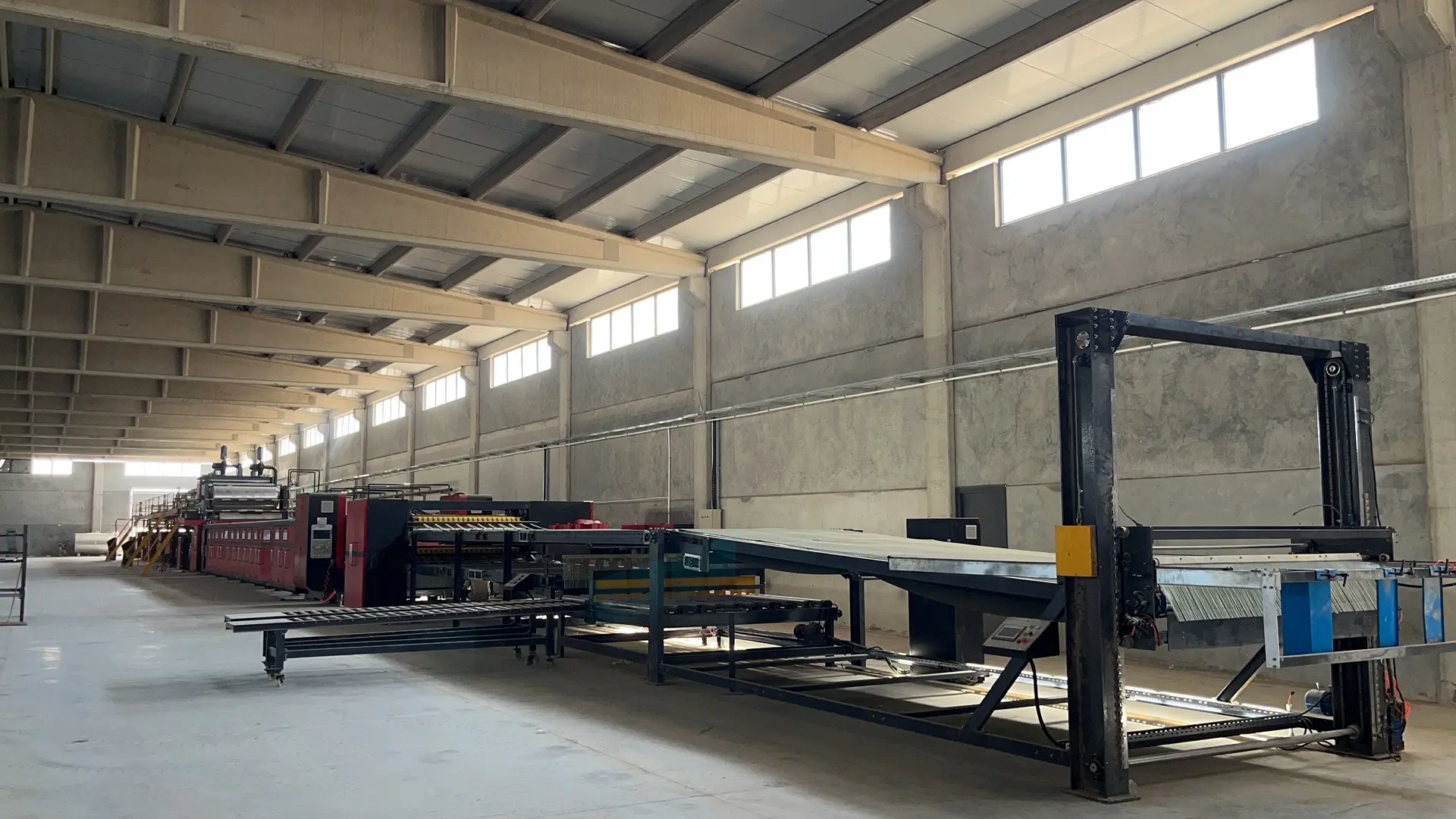
Core Structure and Working Principle of a Corrugated Cardboard Line Production Unit
Today's corrugated cardboard production lines bring together three main steps board forming, wet end processing, and dry end curing to turn basic materials into strong packaging products. The process joins flat outer sheets called linerboards with the wavy middle layer known as fluted medium. This combination happens through careful engineering techniques that create the special balance of strength and light weight we see in quality corrugated boards used throughout commerce.
Working Principle of Corrugated Cardboard Production Lines
A corrugator machine takes regular kraft paper and forms it into those wavy flutes we all know, pressing them together with hot rollers before sticking everything onto linerboards using starch glue. Operators need to keep an eye on several important factors during this process. Roller temps usually run somewhere between 120 and 180 degrees Celsius, and the glue needs to have just the right consistency, around 900 to 1200 centipoise. When making single wall boxes, there's basically one fluted layer stuck between two flat pieces of paper. Double wall construction adds another set of flutes on top for extra strength, which makes these boxes ideal for shipping heavier items that might otherwise crush standard packaging.
Wet and Dry Process Stages in Board Manufacturing
In wet-end systems, steam-conditioned papers enter the corrugator at 12–18% moisture content. Starch adhesives applied to flute tips require 8–12% solids concentration for proper bonding. Dry-end operations cure the board through heated platens (90–110°C), reducing moisture to 5–8% and achieving minimum bond strengths of 40 lbf/inch (TAPPI T821).
Board Formation: Combining Liners and Fluted Medium
The latest manufacturing systems switch between different liner weights ranging from around 126 to 336 grams per square meter and adjust flute profiles (with A flutes at 4.8mm thick, B at 2.4mm, and C at 3.6mm) to get just the right amount of compression strength needed for each application. Looking at recent tests on corrugated materials, it turns out that C-flute boards actually perform best when it comes to resisting bending forces, hitting at least 55 pounds per square foot while still being good enough for printing purposes. To keep everything running smoothly, real-time monitoring systems track both the basis weight within plus or minus 2 grams per square meter and the thickness measurement within 0.05 millimeters tolerance, ensuring that every batch maintains the same quality standards throughout production.
Key Components and Their Roles in the Corrugated Cardboard Line Production Unit
Single-Facer: Creating the Flute Profile
The single-facer forms the core structure by pressing the medium paper through heated corrugating rolls, creating the iconic wave pattern (flutes). These flutes range from 3–7 mm in height, directly influencing strength, cushioning, and insulation properties. Precision temperature control ensures uniform flute geometry, which is critical for load-bearing capacity.
Wet End Systems: Linerboards, Mediums, and Starch Application
Linerboards (Kraft or Test paper) and fluted medium are bonded using starch-based adhesives applied at 12–25 g/m². High-quality linerboards provide surface printability and puncture resistance, while the medium determines stacking strength. Adhesive viscosity and application rates are optimized to prevent delamination under stress.
Dry End Operations: Drying, Heating, and Calibration
After bonding, the board passes through steam-heated plates (120–180°C) to cure adhesives and reduce moisture to 6–9%. Calibration rollers apply controlled pressure to achieve consistent thickness (±0.05 mm), ensuring compatibility with downstream converting equipment.
Control Systems and Sensor Integration for Real-Time Monitoring
Modern units use PLCs and IoT sensors to track speed (100–400 m/min), glue consumption, and temperature. Real-time data identifies deviations such as adhesive underapplication (±5% tolerance) within 2–3 seconds, minimizing waste by 18% (Credence Research 2023).
Cutting, Creasing, and Gluing Units: Preparing Panels for Conversion
High-precision rotary dies cut sheets into box blanks with ±0.8 mm accuracy, while creasing tools create fold lines without fiber rupture. Hot-melt adhesives (applied at 160–180°C) secure joints, enabling over 98% glue bond integrity for automated box assembly.
How Automation Enhances Efficiency and Reduces Downtime
The latest corrugated cardboard production lines can boost output by around 15 to 20 percent when they incorporate automated material handling systems into their operations. These systems rely on robotic arms that position the linerboards and fluted medium layers with remarkable accuracy, operating at speeds well over 300 meters per minute. Meanwhile, conveyor belts equipped with self-calibration features take care of alignment issues without needing workers to constantly make adjustments. According to research published by McKinsey in 2023, facilities that have gone fully automated experience significantly fewer unexpected shutdowns too. The study showed these plants cut down on unplanned downtime somewhere between 20 and 30 percent simply because they can detect problems early in components like single facer units and glue application equipment before major failures occur.
Data-Driven Optimization for Consistent Output and Predictive Maintenance
Modern analytics systems can handle around 2,000 data points every minute coming from things like motor vibrations, steam pressure readings, and wear on cutting blades. These smart systems learn from about 18 months worth of factory floor data to predict when maintenance will be needed, getting it right about 94 times out of 100 according to Deloitte's research from 2022. Factories that implement such technology typically save around $18k each year on repairs per production line. What's really impressive is how consistent product quality stays too many plants report nearly perfect results with their boards staying flat and strong throughout entire 8 hour work shifts without much variation at all.
From Board to Box: Final Shaping and Output Functions
Integrated Printing Systems on the Production Line
Inline flexographic printers apply logos, handling instructions, or barcodes directly to corrugated sheets at speeds exceeding 400 m/min. This eliminates secondary handling and reduces ink consumption by 22% through closed-loop viscosity control. Water-based inks are preferred due to their compatibility with recycled liners and lower environmental impact.
Stacking and Output Handling for Seamless Downstream Logistics
Automated palletizers arrange finished panels in stack heights optimized for forklift ergonomics, reducing workplace injuries by 31% in high-volume facilities. Humidity sensors embedded in conveyors adjust stacking intervals to prevent adhesive seepage or warping, maintaining moisture levels at 8–12% for optimal box integrity.
The Converting Stage: Transforming Boards into Box-Ready Panels
Die-cutting defines box geometry, while rotary scoring creates fold lines without compromising the flute structure. Slotting machines cut interlocking tabs with closure tolerances under 1 mm. These processes are synchronized through centralized PLCs, enabling a single production line to produce more than 15 box styles per shift.
FAQ
How does automation enhance efficiency in corrugated cardboard production?
Automation boosts output by accurately positioning materials and reducing unplanned downtime through early detection of potential issues, improving overall efficiency and reliability.
Table of Contents
- Core Structure and Working Principle of a Corrugated Cardboard Line Production Unit
- Key Components and Their Roles in the Corrugated Cardboard Line Production Unit
- How Automation Enhances Efficiency and Reduces Downtime
- Data-Driven Optimization for Consistent Output and Predictive Maintenance
- From Board to Box: Final Shaping and Output Functions
- FAQ