 EN
EN
Understanding Your Production Requirements
Before integrating an automatic corrugated box packing machine into your production line, it is essential to conduct a thorough assessment of your current operations. At Dongguang Huayu Carton Machinery Co., Ltd., we have observed that successful integration begins with understanding your specific production volume, box specifications, and existing workflow patterns. Our 36,000-square-meter manufacturing facility has taught us that no two production environments are identical—whether you are processing standard RSC boxes or custom die-cut designs, the automatic corrugated box packing machine must align with your throughput requirements. We recommend analyzing your peak production periods, average order sizes, and the variety of box dimensions you handle regularly. This initial evaluation ensures that the selected equipment not only fits your physical space but also matches your operational cadence, preventing bottlenecks while maximizing efficiency gains.
Selecting the Right Machine Configuration
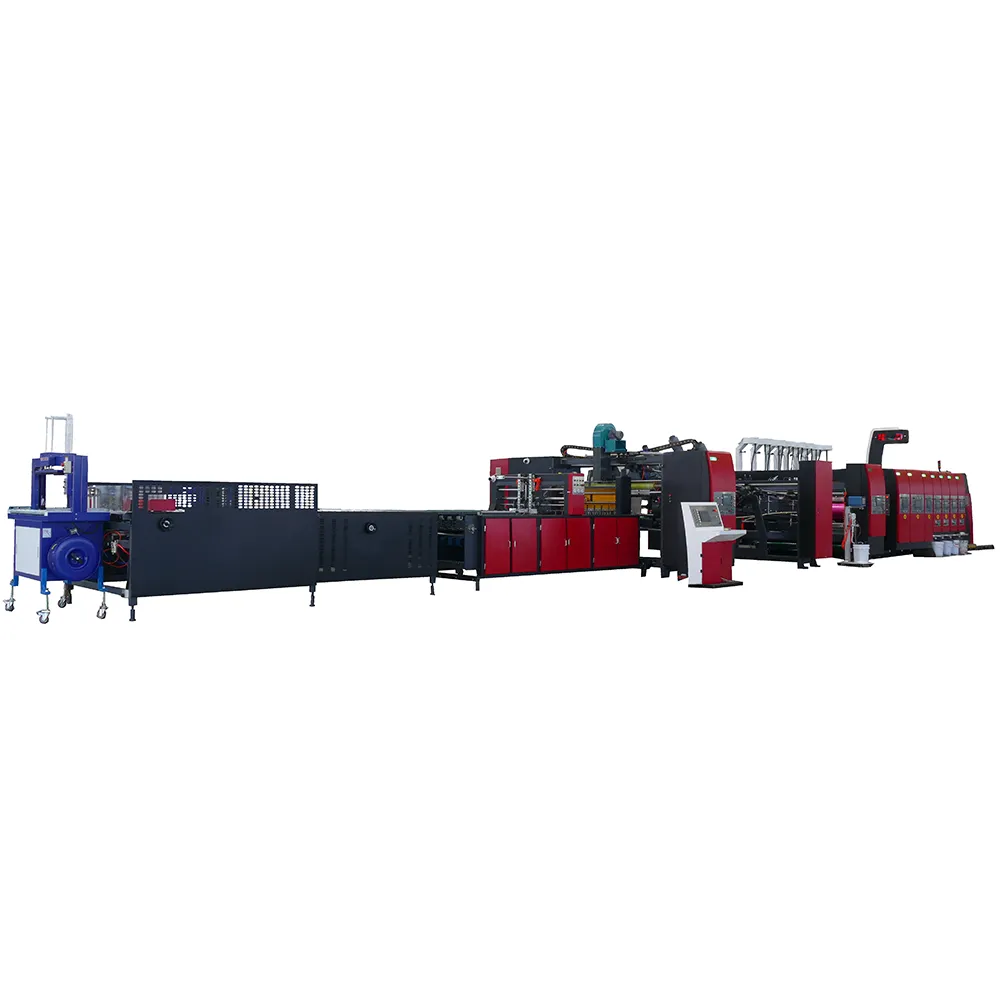
Choosing the appropriate automatic corrugated box packing machine requires balancing technical capabilities with practical operational needs. Based on our experience serving over 100 countries including the United States, Germany, and Italy, we have learned that machine flexibility is paramount. Our high-speed carton printing slotting die-cutting machines demonstrate that modern production demands quick changeover capabilities—your packing solution should offer similar adaptability. Consider whether you need inline integration with existing printing and converting equipment or standalone operation with offline feeding systems. The machine's servo-driven technology, which we incorporate in our advanced production lines, enables precise box handling and reduces setup times significantly. Additionally, evaluate the packing machine's compatibility with your current material specifications, including board grade, flute types, and finished box dimensions to ensure seamless material flow throughout the production process.
Physical Integration and Layout Optimization
The physical placement of your automatic corrugated box packing machine within the production floor directly impacts overall efficiency. Drawing from our ISO 9001-certified manufacturing processes, we emphasize the importance of ergonomic material flow and operator accessibility. The integration should create a logical progression from board feeding through printing, die-cutting, gluing, and finally to automated packing and palletizing. Ensure adequate space around the machine for maintenance access, typically requiring clearance on all sides for our technical team's recommended service protocols. Consider the electrical and pneumatic requirements, as our CE-certified equipment demands stable power supply and clean compressed air systems. The layout should also accommodate future expansion—our experience as a national high-tech enterprise has shown that production lines evolve, and your packing integration should allow for modular upgrades without complete reconfiguration.
Automation Control and Software Integration
Modern automatic corrugated box packing machines rely heavily on sophisticated control systems that must communicate effectively with your existing production infrastructure. Our R&D center, staffed by over 30 scientific research personnel, focuses on developing intelligent control interfaces that simplify operator interaction while maximizing functionality. When integrating the packing machine, ensure that its PLC system can interface with your upstream printing and converting equipment through standardized communication protocols. This integration enables automatic speed synchronization, jam detection, and production data logging across the entire line. The human-machine interface should offer intuitive navigation for job setup, parameter adjustment, and troubleshooting diagnostics. We have found that operators with varying technical backgrounds can achieve proficiency quickly when the control system features clear visual indicators and logical menu structures, reducing training time and minimizing operational errors.
Operator Training and Change Management
Successful integration extends beyond mechanical installation to encompass comprehensive operator training and workflow adaptation. Our 13 consecutive years of export leadership have reinforced that technology adoption succeeds only when personnel embrace new processes. Develop a structured training program covering machine operation, routine maintenance procedures, and safety protocols specific to the automatic corrugated box packing machine. Operators should understand not only how to run the equipment but also how to interpret warning signals, perform basic troubleshooting, and execute format changes efficiently. Additionally, involve production planning and quality control teams in the integration process, as automated packing affects order scheduling, inventory management, and final product inspection protocols. Creating standard operating procedures that document best practices ensures consistency across shifts and maintains production quality during personnel transitions.
Performance Monitoring and Continuous Optimization
After initial integration, establishing metrics to evaluate the automatic corrugated box packing machine's impact on your operations ensures long-term success. Track key performance indicators including overall equipment effectiveness (OEE), packing speed consistency, damage rates, and changeover times. Our advanced CNC processing capabilities have demonstrated that precision manufacturing yields reliability, but real-world performance depends on proper calibration and maintenance adherence. Implement a preventive maintenance schedule based on the manufacturer's recommendations, typically including regular lubrication, sensor calibration, and wear component inspection. Analyze production data to identify optimization opportunities—perhaps adjusting conveyor speeds, refining box collation patterns, or modifying stacking configurations to improve pallet stability. Continuous refinement transforms the packing machine from a standalone asset into an integrated productivity driver that enhances your entire corrugated packaging operation.